Discover how everyday housework boosts fitness. Learn how vacuuming, mopping, and gardening act as effective workouts that help you achieve daily exercise goals naturally.
Discover how small coffee and espresso tweaks can create heart healthy coffee habits and sleep friendly routines while keeping your daily caffeine enjoyment balanced and satisfying.
Boost wellness with gamification through fun step challenges, sleep tracking, and the no soda challenge that encourage healthy habits, motivation, and friendly competition.
Discover how social media effects contribute to rising teen anxiety, supported by mental health studies, coping strategies, and parental tips for protecting adolescent well-being online.
Explore how the health effects of loneliness and social isolation are becoming a major public health risk, impacting physical and mental well-being across all ages globally.
Explore how wearable health technology in smartwatches tracks vital signs, spots early warning patterns, and supports smarter, more proactive health decisions in everyday life.
Explore how CRISPR gene editing is transforming genetic disease treatment, uncovering breakthroughs, safety advances, and the future possibilities of curing inherited disorders through DNA repair.
Artificial skin technology and electronic skin research enable prosthetics, robotics, and burn grafts to sense touch, temperature, and textures like real skin.
Discover how smart thermostats and health are connected by optimizing bedroom temperature to improve sleep quality, support easier breathing, and create a more comfortable, restorative sleep environment.
Learn how oral contraceptives and hormonal pills work, their effectiveness rates, and common birth control side effects to make informed, safe contraception choices.
Learn how aspirin therapy supports heart health, acts as a blood thinner, and when daily aspirin use can pose bleeding risks according to medical guidance.
It’s reported that up to 70% of the population have sensitive skin. More alarming, allergies and skin sensitivities are known to affect millions of patients taking prescriptions every year.
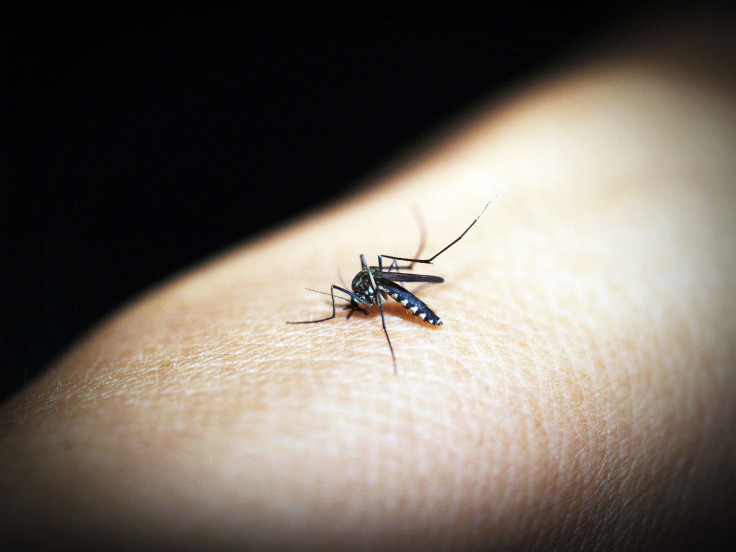
Biting insects (bugs, fleas, flies, mites, mosquitoes, ticks) locate and bite their blood host targets from the chemical cues they release. Such cues are Volatile organic compound (VOC) produced by their skin microbes after they metabolize human skin gland secretions, i.e., an individual's VOC profile is largely the product of their Skin flora. Thus, biting preference is the outcome of how each biting insect's odorant receptors detect the VOCs unique to the individual it bites.
Skin glands include apocrine and eccrinesweat glands, and sebaceous glands (see below from 1).
Skin glands are differentially distributed across the body and human skin microbe abundance matches theirs (see below from 1).
The human odor profile consists of more than 400 compounds (2). Research on which ones are most important in attracting biting insects is very much in its infancy.
One small study, consisting of 48 adult male volunteers, on the African malaria mosquito Anopheles gambiae sensu stricto found that individuals the mosquitoes found highly attractive had different skin bacteria compared to individuals they found poorly attractive, specifically greater abundance but lower diversity of skin-associated bacteria (see below from 3).
In another small study, also consisting of 48 adult male volunteers, Anopheles gambiae sensu strictofound individuals carrying the Human leukocyte antigen gene Cw*07 more attractive (4). Since different individuals have different HLA haplotypes,
Each individual's unique HLA system generates different peptides, i.e., source material their skin-associated microbes metabolize and convert to VOCs is unique.
As well, each individual's unique HLA is involved in the immunological processes that culminate in their unique microbial profile since immune responses select which microbes to keep or reject.
Individual genetics also influence skin temperature and humidity profiles, and metabolic rate, which are other factors that influence individuals' differential attractiveness to biting insects. Metabolic rate influences local carbon dioxide levels, which along with ammonia and lactic acid and other aliphatic carboxylic acids influence landing rates of biting insects like mosquitoes (5).
Each human thus has a largely individual VOC profile, product of their unique genetics and unique skin microbial profile. In turn, biting insects have each their specific odorant receptors. Combination of these two parameters likely make some humans more attractive to each such biting insect compared to others. Research on this topic is still nascent and there's more data for disease-carrying mosquitoes than for other biting insects.
Since human lifestyle, especially diet can actively sculpt human microbiota profiles, it's likely future research will reveal how different diets could influence an individual's VOC profile and in turn increase or decrease a biting insects's preference for a particular individual.
Similar processes likely explain differences between dogs who get ticks versus those who don't. However, in the case of ticks that's only the first step since immune status probably determines whether or not they successfully establish an infection, healthier dogs fending off ticks that could stably colonize less healthy ones.
Bibliography
1. Verhulst, Niels O., et al. "Chemical ecology of interactions between human skin microbiota and mosquitoes." FEMS microbiology ecology 74.1 (2010): 1-9. http://femsec.oxfordjournals.org...
2. Verhulst, Niels O., and Willem Takken. "Skin Microbiota and Attractiveness to Mosquitoes." Encyclopedia of Metagenomics. Springer US, 2015. 591-595.
3. Verhulst, Niels O., et al. "Composition of human skin microbiota affects attractiveness to malaria mosquitoes." PloS one 6.12 (2011): e28991. http://journals.plos.org/plosone...
4. Verhulst, Niels O., et al. "Relation between HLA genes, human skin volatiles and attractiveness of humans to malaria mosquitoes." Infection, Genetics and Evolution 18 (2013): 87-93. https://www.researchgate.net/pro...
5. Smallegange, Renate C., Niels O. Verhulst, and Willem Takken. "Sweaty skin: an invitation to bite?." Trends in parasitology 27.4 (2011): 143-148. https://www.researchgate.net/pro...